Showing posts with label pocket watches. Show all posts

Thursday, December 22, 2022

Winter Time, Pocket Watch Time

Suddenly have this craving to use and carry a pocket watch

Maybe it's to do with winter, as wristwatch checking is impractical in winter, especially when layering but maybe it's something even deeper.


I have many pocket watches but here is my newest one; these two probably still remember what a pocket watch is for, RIP Grandma Liz.


And here it is with my Opinel No. 8.


More pictures will be posted later.

Wednesday, May 8, 2019

VE Day 2019 Molnija Pocket Watch feat. Joseph Stalin.

Victory Day 2019 in Russia tomorrow, so here is a topical watch, and a pocket watch at that. 

My Molnija (MOL-nee-yah) pocket watch with Joseph Stalin on the case front cover.


This one is in a hunter case, meaning it has a flipping and snapping cover protecting the face aka dial.

A hunter-case pocket watch is a case with a spring-hinged circular metal lid or cover, that closes over the watch-dial and crystal, protecting them from dust, scratches and other damage or debris.

Joseph Stalin.


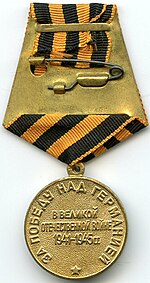
In fact, it is not just Stalin; but the front and back are exact reproductions of the obverse and reverse of the Soviet medal for Victory over Germany.

Compare.


The obverse (front lid).


And...


The reverse (back case cover).


A small seconds hand at 9 o'clock.


As regards the movement, it is powered by the Molnija cal 3602 movement -- a large pocket watch handwind movement, with quite a pedigree. However, seeing as this watch is from the 2000s, the movement is in its later version -- rough finishing, yellow plates. In short, rather despised by most collectors. I opened the case and looked at and, even though I made no photos, it is exactly like the movement in my Pearl Molnija watch from the same period.

More photos.


Monday, July 14, 2014

Molnija Skeleton Pocket Watch

A Molnija pocket watch from my collection in a skeleton version circa early 2000s.


Molnija's rather rough looking skeleton from the early 2000s.


Yellow plates - a hallmark of the later Molnijas. This isn't the only version though. There was another one with yellow plates plus some basic decoration and there was a "chrome" version too.


A large central ruby stone -- only in skeleton version, other late Molnijas don't have it.


A non-matching chain -- not from this watch.


Thursday, July 10, 2014

Molnija Pocket Watch feat. Joseph Stalin

My Molnija (MOL-nee-yah) pocket watch with Joseph Stalin on the case front cover.


This one is in a hunter case.

Joseph Stalin.


In fact, it is not just Stalin; but the front and back are exact reproductions of the obverse and reverse of the Soviet medal for Victory over Germany.

Compare.


The obverse (front lid).


And...


The reverse (back case cover).


A small seconds hand at 9 o'clock.


As regards the movement, it is powered by the Molnija cal 3602 movement -- a large pocket watch handwind movement, with quite a pedigree. However, seeing as this watch is from the 2000s, the movement is in its later version -- rough finishing, yellow plates. In short, rather despised by most collectors. I opened the case and looked at and, even though I made no photos, it is exactly like the movement in my Pearl Molnija watch from the same period.

More photos.


Tuesday, June 24, 2014

Forget the iWatch. The truly hip go for the pocket watch

From MarketWatch on the pocket watch. Pocket watches are back apparently, see link to source below.


Of course, the pocket watch predates the wrist watch and was basically a man's watch while first wrist watches were strictly for the ladies.

Tuesday, May 27, 2014

Smithsonian: Pocket Watch Wearable Tech of its Time

The pocket watch was the wearable tech of its time

An article not about the pocket watch per se but about the pocket watch too... and the wristwatch. And about how the pocket watch predated the wristwatch and was, like, a man's watch while wristwatches were strictly for ladies.

Clocks began to transform everyday life as early as the medieval period, when church bells sounded the hours, letting villagers know the pace of the day. But timekeeping began to weave itself into day-to-day life in an entirely new way as clocks became more omnipresent and portable. Affordable pocket watches weren’t common until the 19th century, but once they arrived, they quickly invaded the world of commerce. When you could time your actions with those of a remote trading partner, new styles of just-in-time commerce could emerge.


Read more: http://www.smithsonianmag.com/innovation/pocket-watch-was-worlds-first-wearable-tech-game-changer-180951435/#7wr1eDJZmy5UXcEh.99
Give the gift of Smithsonian magazine for only $12! http://bit.ly/1cGUiGv
Follow us: @SmithsonianMag on Twitter
Clocks began to transform everyday life as early as the medieval period, when church bells sounded the hours, letting villagers know the pace of the day. But timekeeping began to weave itself into day-to-day life in an entirely new way as clocks became more omnipresent and portable. Affordable pocket watches weren’t common until the 19th century, but once they arrived, they quickly invaded the world of commerce. When you could time your actions with those of a remote trading partner, new styles of just-in-time commerce could emerge.


Read more: http://www.smithsonianmag.com/innovation/pocket-watch-was-worlds-first-wearable-tech-game-changer-180951435/#7wr1eDJZmy5UXcEh.99
Give the gift of Smithsonian magazine for only $12! http://bit.ly/1cGUiGv
Follow us: @SmithsonianMag on Twitter

Sunday, April 20, 2014

DF: Pocket Watches are Fun Collectibles

An article on pocket watches by Dr. Lori.

Let's face it: articles (or posts) on pocket watches are rare these days that's why I am sharing it.


Also there is some useful information in the article.

On the history of pocket watches -- they are much older than wristwatches:

Pocket watches were introduced prior to the introduction of the wrist watch. The wrist watch was a World War I era invention (circa 1914) used to aid soldiers on the front lines. Pocket watches were widespread in the 1800s and continue to be of interest today. 

Tips

If your pocket watch does not open easily, don’t force it open. Use a piece of dental floss to pry your pocket watch open or ask a professional jeweler to open your pocket watch for you. Never use a pocket knife or other sharp instrument to open your pocket watch.

Pocket watches should be cleaned regularly. The internal mechanism which is made up of various gears of your pocket watch require regular maintenance by a professional. If the gears get gummy or dirty, then the watch will not tell time accurately.

Don’t overwind your pocket watch. Be gentle. 

Using dental floss to open watches seems like a good idea. I am definitely going to give it a try. I think it should work on snap-on backs.

The number of jewels debate:

The number of jewels refers to the accuracy of the mechanism and the more accurate the watch, the more valuable it is. The greater the number of jewels in your watch (the number of jewels is typically marked on the watch), the more accurate your watch. 

 I have quite a few pocket watches myself (though they are likely not ones Dr. Lori had in mind).

Mine are Molnijas


Saturday, April 12, 2014

Molnija Virgo the Maiden Pocket Watch

My Zodiac Signs-themed pocket watch -- a Molnija (read: MOL-nee-yah) with Virgo the Maiden on the dial.


There was a whole series -- 12 pocket watches but this is the only one I have.


Looks like the dial was tastefully hand-painted.


Was somebody doing a bit of nude modelling at the factory?

This watch is early 2000s. It is powered by a Molnija 3602 mechanical movement -- a large pocket watch movement 36 mm in diameter. I opened the back (which opens and closes without problem) and looked at the movement though made no photos this time. However the movement is a later 2000 version movement -- all yellow, minimal markings, reduced jewels, simplifications -- in fact exactly like the movement on this my Molnija pocket watch that I did a post earlier on (link)

Wednesday, November 27, 2013

Shared: Can Stopped Watches Really Help Determine Time of Death?: Detective fiction, or forensic fact? - Washington City Paper

Some reading on the subject of stopped watches from the Washington City Paper

Can Stopped Watches Really Help Determine Time of Death?: Detective fiction, or forensic fact? - Washington City Paper

It goes like this:

In detective fiction, a common plot device is the broken clock or watch that tells the time of the murder. Does this ever happen? Has a broken clock or watch ever been admitted as evidence in a murder trial to show the time of the crime? —Oscar Colombo, Maryland
 
This is one of those tropes future consumers of vintage whodunits are going to find unintelligible. It’s not like we don’t use timekeeping devices anymore; on the contrary, I’m still waiting for clothing manufacturers to resize that little pouch in a pair of pants to fit the pocket watch known as an iPhone. However, the day will surely come when someone reading Agatha Christie’s 1963 novel The Clocks (the murder victim is found surrounded by clocks stopped at 4:13) is going to say: A clock with stopped hands? What the hell is that? 

Be that as it may, we found many real-life murder cases where a stopped timepiece had been used to determine the time of death. In 1867 Joseph Humphrey was found dead near Yuba City, Calif., having been attacked by an unknown assailant with a hammer. The time of death was fixed by a silver watch with a broken crystal in the victim’s pocket, showing about 11 PM. 

In 1919, taxi driver Dosylva Cote was waylaid and beaten to death while en route between Worcester and Clinton, Mass. Although his automobile was taken, his money and watch were not. The watch had stopped at 3:30 AM and restarted when shaken, thus likely indicating the time of death. 

And in 1935 Mr. and Mrs. Thomas Coleman of Spotsylvania, Virginia, were murdered and thrown into a well. One clue left behind by the killers was an antique eight-day pendulum clock stopped at 8:20, apparently when the cabinet door was opened to search for money. 

In other instances, a stopped watch figured in a murder trial: In 1857, Charles Littles of Rochester, New York, was murdered by his brother-in-law Ira Stout for allegedly mistreating his wife, Stout’s sister Sarah. (The fact that Littles had discovered his wife and BIL were having an incestuous affair may have been a contributing factor.) Sarah and Ira lured Charles to a nearby riverbank one night, where Ira bludgeoned him with an iron mallet and shoved his body into the water. When Ira was tried for the murder, a piece of evidence against him was Charles’s broken watch—stopped at 8:40 PM, the time of the killing. 

In 1954 not one but two damaged watches were involved in one of the most famous murder cases of the 20th century: that of Dr. Sam Sheppard, accused of beating his wife, Marilyn, to death. Watch one, which belonged to Marilyn, was initially reported to have stopped at 3:12, presumably indicating the time of death; later, though, one investigating officer said it had read 11:30, and a police evidence photo showed it reading 8:05. Watch two, belonging to Sam, was covered with blood and found in a green bag on a bluff overlooking Lake Erie, near the Sheppard home. This watch had stopped at 4:15, apparently when water got into it. Sheppard claimed this had happened innocently prior to the murder, and that he then got blood on the watch (which he evidently was still wearing in the middle of the night even though it was broken) while checking his wife’s pulse. The alternative theory seems to be that after killing his wife, Sheppard threw the bloody watch into the lake, then thought better of it. Sheppard was convicted and imprisoned but acquitted years later after a second trial. 

In 2004 Ivan Camacho was found dead in a remote part of southern California with multiple stab wounds and other injuries, wearing a smashed and bloody wristwatch stopped at 3:19 AM, which investigators took to be the time of death. Camacho had last been seen alive at 2:45 AM with his friend Ricardo Machuca, and Machuca was next seen at about 4 with a fresh cut on his finger. Machuca was found guilty of first-degree murder. 

In the aforementioned cases, the broken timepiece wasn’t pivotal in convicting a criminal. But we found one where it was. 

In 1941 Merrill Joss was tried in Maine for the bludgeoning death of his wife, Luverne. Witnesses testified that Merrill said he’d left the house at 8 PM and returned at most 12 minutes later to find Luverne dead. But her watch, broken and bloodied, was stopped at 8:16. What’s more, Merrill didn’t call the police until 9:03, 47 minutes after the watch had stopped. He was convicted and sentenced to prison. 

Despite advancing technology, dramatists still resort to the stopped-watch gambit. In a recent episode of the TV series Criminal Minds, for example, a serial killer places a watch stopped at 6:22 on victims’ wrists. This seems a bit musty. Surely in an era of ubiquitous metadata and mobile devices with accelerometers, a modern Poirot might determine not just the time and place of a victim’s death, but the force of the fatal blow. 

—Cecil Adams

Friday, November 15, 2013

Molnija Pocket Watch OBL Dial

And now for something slightly controversial (maybe not, it is just a watch).

From my collection comes this Molnija (read: Mol-nee-yah) pocket watch with none other than Osama Bin Laden on the dial.


The greenish dial shows Osama Bin Laden and an American flag under him at 6 o'clock where the small seconds hand is.


But there is more. As you can see for yourself the Al-Qaeda leader appears to be in cross-hairs or something. So what is the message that the watch tries to convey? Probably none. Or to each his own.


And the American flag detail at 6 o'clock.


Molnija pocket watches are powered with the cal. 3602 (or 3603) Molnija movement, a large pocket-watch movement, related to, and derived from, premium European movements of the early 20th century.


Movement shots.


The movement has yellow (brass?) plates -- such movements were made in the 2000s, but with markings. There's some number, it is some kind of movement identification number but not a serial number, RU for Russia, the caliber designation - 3602 and a Molnija watch factory logo next to it. 


For a much bigger picture of the movement, try this link

As I was preparing to make this post to this blog I thought it would be interesting to do a little Internet research to see (i) if I could find other mentions of this watch on the world wide web and (ii) if there were any other watches featuring Osama Bin Laden.

About a year ago I already found a picture of the same watch, that is with the same dial but in a different Molnija case -- the one with the upper lid / duster -- a hunter case. It was being sold on ebay and I was able to find the lot again because I bookmarked it at the time. But strangely the picture of the dial with Osama on it has in the meantime disappeared although the picture of the back remains. On the other hand I found out that this watch got a mention in a 2002 Reuters report as printed (or just posted online) by the Daily Times of  Pakistan -- information that can be useful in dating the watch. My guess therefore is the watch was made before, or early in, 2002 but after 9/11 2001.

Here is what the report says.

Watch featuring Osama bin Laden
A Russian-made pocket watch featuring Osama bin Laden and an American flag is displayed in front of the Temple of Heaven in Beijing. The pocket watch was selling for about $25 along the Sino-Russian border days before the first anniversary of 9/11. —Reuters
And there is this picture.

Same watch from the year 2002 but in different colors, the dial appears to be white, the hands gold-toned, Osama Bin Laden very much the same.

The Reuters report fails to mention the target signs on OBL though (and I can see why it would fail to mention that). 


I also saw that Osama Bin Laden had made it to the dial of at least one other watch. Chinese watches named for some reason Nanci (?) have a line of watches with portraits of (in)famous people on the dial - Che Guevara, Marilyn Monroe, etc. and Osama bin Laden is also there.